
Iron Deficiency in Women: Symptoms, Causes, Blood Tests and Iron-Rich Foods
Aug 04, 2026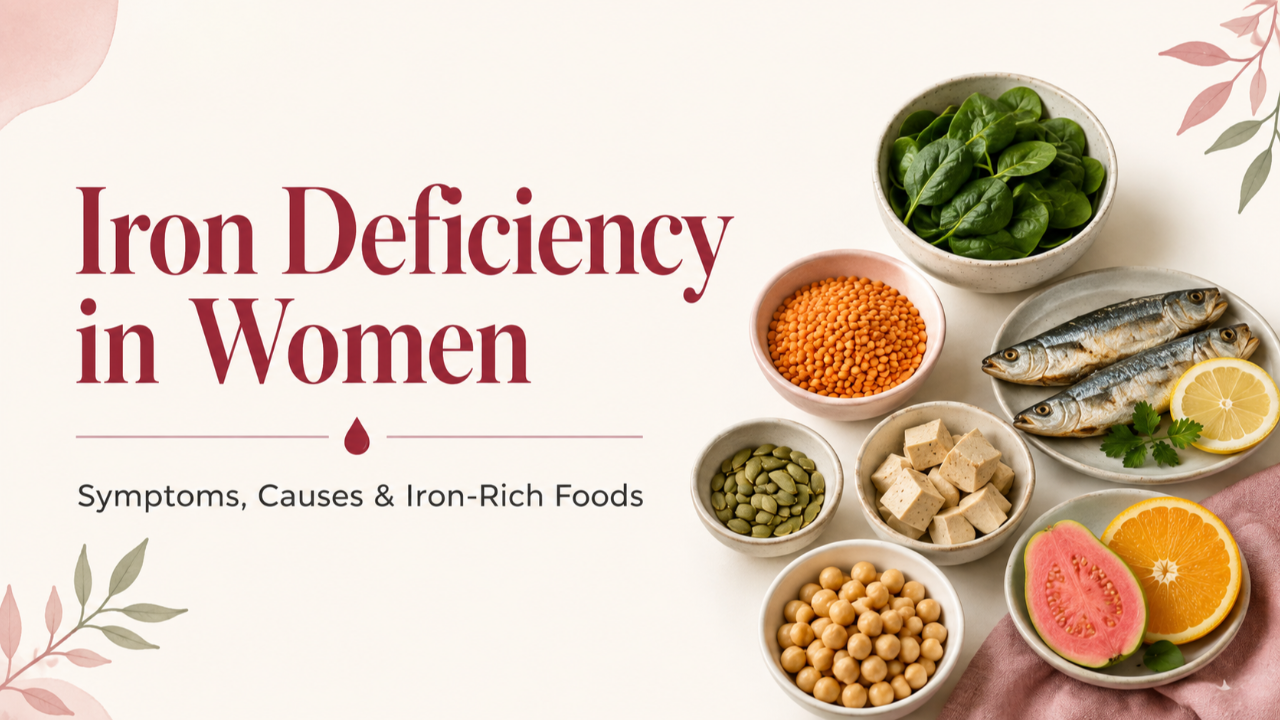
Iron deficiency is one of the most common nutritional deficiencies worldwide and is an especially important concern for women who menstruate, experience heavy periods, are pregnant or have increased nutritional requirements.
You may have heard people describe iron deficiency as simply “having low blood.” However, iron deficiency is more complex than that. It can affect energy, concentration, exercise tolerance, immunity and quality of life even before it progresses to iron deficiency anaemia.
If you frequently feel tired, breathless, weak or unable to concentrate, it may be tempting to assume that you need more iron. However, these symptoms can have many causes. The only reliable way to confirm iron deficiency is through appropriate blood tests and medical assessment.
This guide explains the symptoms of iron deficiency in women, common causes, relevant blood tests, iron-rich foods and practical ways to improve iron absorption.
What Does Iron Do in the Body?
Iron is an essential mineral needed to produce haemoglobin, the protein in red blood cells that carries oxygen from the lungs to the rest of the body.
Iron is also involved in:
- Producing myoglobin, which helps supply oxygen to muscles
- Supporting normal energy production
- Brain and neurological development
- Immune function
- Cell growth and function
- The production of certain hormones
When the body does not have enough iron, it may initially use its stored iron to maintain normal haemoglobin production. As those stores become depleted, the body may eventually become unable to produce enough healthy red blood cells.
What Is the Difference Between Iron Deficiency and Iron Deficiency Anaemia?
Although the terms are often used interchangeably, iron deficiency and iron deficiency anaemia are not exactly the same.
Iron deficiency
Iron deficiency means that your body’s iron stores are low. Haemoglobin may still be within the laboratory reference range, particularly during the earlier stages.
Iron deficiency anaemia
Iron deficiency anaemia occurs when iron deficiency becomes severe enough to reduce haemoglobin production and affect the number or quality of red blood cells.
This means it is possible to have low ferritin or depleted iron stores without yet having anaemia.
Anaemia itself can also have causes other than iron deficiency, including deficiencies in vitamin B12, folate or vitamin A, chronic inflammation, kidney disease, infections, inherited blood disorders and blood loss. Iron deficiency remains the most common nutritional cause of anaemia worldwide.
How Common Is Anaemia in Malaysia?
Anaemia remains an important health concern in Malaysia, particularly among women and people with certain chronic health conditions.
A nationwide Malaysian analysis published in 2026 estimated that anaemia affected approximately 15% of the population represented in the study, equivalent to an estimated 3.6 million people. Women were substantially more likely than men to have anaemia in that analysis. However, not every case of anaemia was necessarily caused by iron deficiency.
Studies of pregnancy in Malaysia have also reported considerable variation in anaemia prevalence depending on the population and setting studied. This reinforces the importance of antenatal screening, appropriate supplementation and individualised nutrition support.
Common Iron Deficiency Symptoms in Women
Iron deficiency symptoms may develop gradually and can be easy to dismiss as the result of stress, poor sleep or a busy lifestyle.
Possible symptoms include:
- Persistent tiredness or weakness
- Reduced exercise tolerance
- Shortness of breath
- Dizziness or light-headedness
- Headaches
- Difficulty concentrating
- Brain fog
- Rapid or noticeable heartbeat
- Pale skin
- Feeling unusually cold
- Brittle or spoon-shaped nails
- Hair shedding
- Restless legs
- Frequent infections
- Soreness or cracking at the corners of the mouth
- An unusual desire to chew ice or eat non-food substances, known as pica
Symptoms do not always reflect the severity of the deficiency. Some people with low iron may experience several symptoms, while others notice very few.
Fatigue alone does not confirm an iron deficiency. Thyroid conditions, inadequate calorie intake, poor sleep, depression, anxiety, vitamin B12 deficiency and other medical conditions can produce similar symptoms.
Low Ferritin Symptoms
Ferritin is a protein that stores iron. A low ferritin result usually indicates reduced iron stores, although the result must be interpreted alongside your health history and other blood markers.
Possible low ferritin symptoms include:
- Fatigue
- Reduced stamina
- Difficulty concentrating
- Hair shedding
- Restless legs
- Weakness
- Reduced exercise performance
Ferritin can also rise during inflammation or infection, which may make iron stores appear more adequate than they are. This is one reason why a doctor should interpret ferritin together with other results rather than relying on one number alone.
What Causes Iron Deficiency in Women?
Iron deficiency generally develops because iron is being lost, poorly absorbed or not consumed in sufficient amounts to meet the body’s needs.
1. Heavy menstrual bleeding
Heavy periods are a major cause of iron deficiency in women of reproductive age.
Signs that menstrual bleeding may be unusually heavy include:
- Bleeding for more than seven days
- Needing to change a pad or tampon very frequently
- Passing large blood clots
- Bleeding through clothing or bedding
- Needing to use more than one menstrual product at the same time
- Feeling dizzy, weak or breathless during or after menstruation
Heavy bleeding should not simply be accepted as normal. It may be associated with fibroids, adenomyosis, endometriosis, bleeding disorders, hormonal conditions or other gynaecological issues.
Replacing iron without identifying and treating ongoing blood loss may provide only temporary improvement.
2. Pregnancy
Iron requirements increase during pregnancy to support expansion of maternal blood volume, the placenta and the developing baby.
Iron deficiency during pregnancy may increase the likelihood of maternal anaemia and may be associated with adverse pregnancy and birth outcomes. Screening and treatment should therefore be managed through the person’s antenatal healthcare team rather than through diet or over-the-counter supplements alone.
3. Inadequate iron intake
People who consume limited amounts of iron-rich food may be more vulnerable, especially when their requirements are already high.
This may occur with:
- Restrictive dieting
- Low overall food intake
- Limited food variety
- Poor appetite
- Food insecurity
- Poorly planned vegetarian or vegan diets
- Avoidance of meat without suitable replacements
Following a plant-based diet does not automatically cause iron deficiency. However, plant-based diets require appropriate planning because non-haem iron is generally absorbed less efficiently than haem iron.
4. Gastrointestinal blood loss
Blood loss from the digestive tract can occur without being immediately visible.
Possible causes include:
- Stomach or intestinal ulcers
- Inflammatory bowel disease
- Haemorrhoids
- Polyps
- Gastrointestinal cancers
- Regular use of certain anti-inflammatory medicines
- Other gastrointestinal conditions
Iron deficiency in men and postmenopausal women is especially important to investigate because routine menstrual loss does not explain it.
5. Reduced iron absorption
Iron absorption may be impaired by conditions or procedures affecting the stomach or small intestine, including:
- Coeliac disease
- Inflammatory bowel disease
- Bariatric surgery
- Other gastrointestinal surgery
- Certain stomach conditions
- Long-term use of some acid-suppressing medications
6. Increased requirements during growth
Children and teenagers have higher iron needs during periods of rapid growth. Teenage girls who have started menstruating may face the combined effects of growth and menstrual blood loss.
7. Frequent blood donation
Regular blood donation removes iron-containing red blood cells and may gradually reduce iron stores, particularly when dietary intake does not replace those losses.
Who Is at Greater Risk of Iron Deficiency?
People who may have an increased risk include:
- Women with heavy or prolonged periods
- Pregnant women
- Women who have recently given birth
- Teenagers experiencing rapid growth
- Infants and young children
- Frequent blood donors
- Endurance athletes
- People consuming very restrictive diets
- Vegetarians and vegans whose diets are not appropriately planned
- People with gastrointestinal conditions
- People who have undergone bariatric or gastrointestinal surgery
- Individuals with chronic blood loss
- Older adults with limited food intake
- People taking medicines that may affect absorption or increase bleeding risk
Athletes may be particularly vulnerable because requirements can be influenced by menstrual blood loss, dietary restriction, increased red blood cell production and repeated physical impact.
How Is Iron Deficiency Diagnosed?
Iron deficiency cannot be diagnosed accurately from symptoms alone.
A doctor may request several blood tests, depending on your symptoms and medical history.
Full blood count
A full blood count may include:
- Haemoglobin
- Haematocrit
- Red blood cell count
- Mean corpuscular volume
- Mean corpuscular haemoglobin
These results help identify anaemia and provide information about the size and haemoglobin content of red blood cells.
Serum ferritin
Ferritin is commonly used to assess stored iron. Low ferritin strongly supports iron deficiency.
Because ferritin can increase during inflammation, a normal or raised result does not always completely exclude iron deficiency in someone with an inflammatory condition.
Additional iron studies
These may include:
- Serum iron
- Transferrin
- Total iron-binding capacity
- Transferrin saturation
A doctor may also request tests for vitamin B12, folate, inflammation, kidney function, coeliac disease or other conditions depending on the clinical picture.
A bone marrow biopsy is not a routine test for straightforward iron deficiency. It is generally reserved for more complex situations where the cause of abnormal blood results remains unclear.
Why Finding the Cause Matters
Iron deficiency should not be treated as merely a dietary problem.
A low iron result may indicate:
- Ongoing menstrual blood loss
- Gastrointestinal bleeding
- Reduced absorption
- Inadequate intake
- Increased requirements
- Another health condition
Clinical guidance recommends confirming iron deficiency and appropriately investigating its cause, particularly in men, postmenopausal women and people with unexplained or recurrent iron deficiency anaemia.
Simply taking an iron supplement without investigating the cause may delay diagnosis of the underlying issue.
Can Food Correct Iron Deficiency Anaemia?
Diet can help prevent iron deficiency, support recovery and maintain healthy iron stores. However, food alone may not correct established iron deficiency anaemia quickly enough.
Whether dietary changes are sufficient depends on:
- How low your haemoglobin and ferritin are
- The cause of the deficiency
- Whether blood loss is continuing
- Your ability to absorb iron
- Pregnancy status
- Your symptoms
- Other medical conditions
Moderate or severe iron deficiency often requires medical iron replacement in addition to dietary changes.
Haem Iron and Non-Haem Iron
Iron in food is present in two main forms.
Haem iron
Haem iron is found in animal foods and is generally absorbed more efficiently.
Sources include:
- Red meat
- Liver and organ meats
- Chicken
- Fish
- Shellfish
Liver is very rich in iron, but it should not be consumed excessively. Pregnant women should seek individual advice because liver is also high in preformed vitamin A.
Non-haem iron
Non-haem iron is found in plant foods, fortified products and some animal foods.
Sources include:
- Tofu
- Tempeh
- Lentils
- Chickpeas
- Kidney beans
- Soybeans
- Iron-fortified breakfast cereals
- Wholegrain bread
- Oats
- Pumpkin seeds
- Sesame seeds
- Cashews
- Dark green vegetables
- Dried fruit
The body absorbs non-haem iron less efficiently, but absorption can be improved through meal composition.
Iron-Rich Foods Commonly Available in Malaysia
A practical iron-rich diet does not require imported “superfoods.”
Animal sources
- Beef
- Chicken
- Sardines
- Ikan kembung
- Tuna
- Prawns
- Mussels
- Clams
- Eggs
Plant sources
- Tofu
- Tempeh
- Dhal
- Chickpeas
- Red beans
- Kidney beans
- Soybeans
- Pumpkin seeds
- Sesame seeds
- Cashews
- Spinach
- Kailan
- Broccoli
- Fortified cereal
- Wholemeal bread
- Oats
Animal foods do not contain only haem iron; they may contain both haem and non-haem iron. Plant foods contain non-haem iron.
How to Improve Iron Absorption From Food
Pair iron-rich foods with vitamin C
Vitamin C can improve the absorption of non-haem iron.
Useful combinations include:
- Dhal with tomato and capsicum
- Tofu with broccoli
- Fortified cereal with guava
- Tempeh with stir-fried vegetables
- Chickpea salad with lime juice
- Wholemeal toast with eggs and a piece of fruit
Vitamin C-rich foods include:
- Guava
- Oranges
- Mandarin
- Kiwi
- Papaya
- Strawberries
- Capsicum
- Tomatoes
- Broccoli
Avoid tea and coffee around iron-rich meals
Tea and coffee contain polyphenols that can reduce non-haem iron absorption.
When you are actively trying to improve low iron levels, consider leaving approximately one to two hours between an iron-rich meal or iron supplement and tea or coffee.
This includes common drinks such as:
- Kopi
- Teh
- Teh tarik
- Chinese tea
- Green tea
- Coffee
You do not necessarily need to stop drinking them altogether. Adjusting their timing may be sufficient.
Be mindful of calcium timing
Calcium can temporarily reduce iron absorption when consumed in large amounts at the same time.
There is no need to eliminate dairy products from your diet. Instead, someone undergoing treatment for iron deficiency may be advised to separate high-dose calcium supplements from an iron supplement.
Combine plant and animal iron sources
Adding meat, poultry or seafood to a meal containing plant-based iron may improve the overall absorption of iron from that meal.
For example:
- Beef with kailan
- Chicken with dhal
- Sardines with wholegrain bread
- Prawns with tofu and vegetables
Practical Iron-Rich Malaysian Meal Ideas
Breakfast
- Iron-fortified cereal with fruit and milk served separately when appropriate
- Eggs with wholemeal toast and guava
- Oats with pumpkin seeds, raisins and kiwi
- Chapati with dhal and tomato
Lunch
- Rice with beef, kailan and orange slices
- Chicken, tofu and mixed vegetables with rice
- Dhal, chapati and capsicum salad
- Sardines with rice, tomato and vegetables
Dinner
- Ikan kembung with rice and stir-fried broccoli
- Tempeh and tofu with mixed vegetables
- Beef and capsicum stir-fry with rice
- Chickpea curry with vegetables and chapati
Snacks
- Guava with a small handful of cashews
- Fortified cereal
- Roasted chickpeas
- Pumpkin seeds with fruit
- Wholemeal toast with peanut butter
Not every meal needs to be exceptionally high in iron. Consistency and overall dietary adequacy matter.
Should You Take an Iron Supplement?
Do not begin a high-dose iron supplement simply because you feel tired.
Too much iron can cause harm, and taking iron unnecessarily may be particularly risky for people with conditions that affect iron storage or red blood cells.
A doctor may recommend oral iron when blood tests confirm iron deficiency. The appropriate product, dose and schedule depend on the individual.
Possible side effects include:
- Nausea
- Abdominal discomfort
- Constipation
- Diarrhoea
- Dark stools
Do not stop prescribed iron without discussing the side effects with your healthcare provider. A different formulation, dose, schedule or method of treatment may be more suitable.
Iron also interacts with some medicines and supplements. The NIH notes that requirements, supplement safety and medication interactions should be considered before using iron products.
Keep all iron supplements out of reach of children, as accidental overdose can be dangerous.
How Long Does It Take to Improve Iron Levels?
The timeline varies.
Haemoglobin may begin improving after treatment starts, but restoring depleted iron stores usually takes longer. Treatment may need to continue after haemoglobin returns to the normal range, depending on your test results and doctor’s recommendation.
Your healthcare provider may repeat blood tests to assess:
- Whether haemoglobin is increasing
- Whether ferritin is recovering
- Whether treatment is being absorbed
- Whether ongoing blood loss remains present
A lack of response may require further investigation.
Iron Deficiency During Pregnancy
Pregnancy increases iron requirements, but this does not mean pregnant women should self-prescribe high-dose supplements.
Iron needs during pregnancy should be considered alongside:
- Haemoglobin
- Ferritin
- Diet
- Previous pregnancies
- Multiple pregnancy
- Nausea and food intake
- Gastrointestinal conditions
- Individual medical history
Untreated anaemia during pregnancy may affect maternal health and pregnancy outcomes. At the same time, the cause and severity should be properly assessed rather than assuming that all pregnancy-related anaemia is iron deficiency.
Discuss supplementation with your obstetrician, doctor or dietitian.
When Should You Seek Medical Attention?
Arrange a medical assessment when you experience:
- Persistent or worsening fatigue
- Breathlessness
- Dizziness or fainting
- A racing heart
- Very heavy menstrual bleeding
- Blood in the stool
- Black, tar-like stool not explained by an iron supplement
- Unexplained weight loss
- Iron deficiency that repeatedly returns
- Iron deficiency after menopause
- Iron deficiency in a man
- Symptoms during pregnancy
- Chest pain or severe weakness
Seek urgent medical help for severe breathlessness, fainting, chest pain, significant bleeding or symptoms that are rapidly worsening.
How a Women’s Health Dietitian Can Help
Iron deficiency management should address more than a list of iron-rich foods.
A women’s health dietitian in Malaysia can help you:
- Assess your usual iron intake
- Identify restrictive eating or inadequate overall intake
- Build practical iron-rich Malaysian meals
- Plan a nutritionally adequate vegetarian or vegan diet
- Improve iron absorption through food combinations
- Manage supplement-related digestive symptoms alongside your doctor
- Support nutrition during pregnancy or after birth
- Review nutrition around heavy periods
- Identify other possible nutrient gaps
- Create a sustainable plan after your iron stores recover
Dietary support should complement—not replace—medical investigation and treatment.
Frequently Asked Questions About Iron Deficiency
Can you have low iron without anaemia?
Yes. Your iron stores may be depleted even while haemoglobin remains within the reference range. Ferritin and other iron studies may help identify this earlier stage.
Is low ferritin the same as iron deficiency?
Low ferritin usually supports a diagnosis of iron deficiency. However, ferritin should be interpreted alongside other blood results and your health history.
Can iron deficiency cause hair loss?
Iron deficiency may contribute to hair shedding in some people, but hair loss has many possible causes. These include thyroid disorders, stress, genetics, inadequate energy intake and other nutrient deficiencies.
What drink is high in iron?
Most everyday drinks are not major iron sources. It is generally more effective to obtain iron through food and pair plant-based iron with a vitamin C-rich fruit or vegetable.
Does spinach contain iron?
Yes. Spinach contains non-haem iron, but its absorption is affected by compounds naturally present in the vegetable. It can contribute to iron intake, but it should not be relied upon as the only iron source.
Can I drink coffee if I have low iron?
Yes, but consider separating coffee from iron-rich meals and iron supplements by around one to two hours when actively treating low iron.
Can iron-rich foods replace supplements?
They may be sufficient for prevention or mild dietary inadequacy, but they may not correct established iron deficiency anaemia quickly enough. Follow the treatment plan recommended by your healthcare provider.
Does cooking with cast-iron cookware increase iron intake?
Cast-iron cookware may increase the iron content of some foods, particularly acidic or moist dishes. However, the amount is inconsistent, and cookware should not be used as a substitute for medical treatment or a nutritionally adequate diet.
The Bottom Line
Iron deficiency in women is common, but it should never be dismissed as “normal tiredness.”
Heavy periods, pregnancy, restrictive dieting, low iron intake, gastrointestinal blood loss and poor absorption can all contribute. The correct treatment depends on both the severity of the deficiency and its underlying cause.
Focus on:
- Obtaining appropriate blood tests
- Investigating why the deficiency occurred
- Following medical treatment when prescribed
- Including a range of iron-rich foods
- Pairing plant-based iron with vitamin C
- Adjusting the timing of tea and coffee
- Monitoring your blood results as advised
Most importantly, avoid self-diagnosing or taking high-dose iron without confirming that you need it.
At UWUFIT, I provide evidence-based and practical nutrition support for women across different life stages, including women experiencing heavy periods, low iron, pregnancy-related nutrition concerns and persistent fatigue.
This article is for general educational purposes and does not replace individual medical advice, diagnosis or treatment.
SUBSCRIBE FOR WEEKLY LIFE LESSONS
Lorem ipsum dolor sit amet, metus at rhoncus dapibus, habitasse vitae cubilia odio sed.
We hate SPAM. We will never sell your information, for any reason.